Markus is the creator of Chatbots Behaving Badly and a lifelong AI enthusiast who isn’t afraid to call out the tech’s funny foibles and serious flaws.
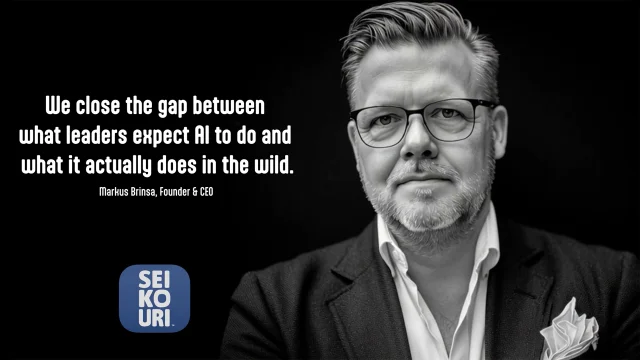
By day, Markus is the Founder and CEO of SEIKOURI Inc., an international strategy firm headquartered in New York City.
Markus spent decades in the tech and business world (with past roles ranging from IT security to business intelligence), but these days he’s best known for Access. Rights. Scale.™, SEIKOURI’s operating system—the framework that transforms discovery into defensible value. He connects enterprises, investors, and founders to still-in-stealth innovation, converts early access into rights that secure long-term leverage, and designs rollouts that scale with precision. Relationships, not algorithms. Strategy, not speculation.
In a nutshell, Markus’ career is all about connecting innovation with opportunity – whether it’s through high-stakes AI matchmaking for businesses or through candid conversations about chatbot misadventures.
He wears a lot of hats (entrepreneur, advisor, investor, creator, speaker), but the common thread is a commitment to responsible innovation.
Markus’ writing spans three lanes, with one dominant theme: how AI behaves in the real world—especially when reality refuses to match the demo.
The largest body of work is Chatbots Behaving Badly: reported case studies of AI systems that deliver inappropriate advice, hallucinate with confidence, mislead users, or fail in ways that create legal and operational risk. Some incidents are absurd. Others are consequential. All are instructive, because they reveal the gap between capability, reliability, and accountability.
The second lane is EdgeFiles—operator-grade analysis for leaders and investors. These pieces focus less on spectacle and more on leverage: how to evaluate emerging systems, secure defensible advantage, and make decisions under uncertainty when the narrative moves faster than the facts.
A smaller set of articles steps back to the broader intersection of technology, strategy, and capital—where market shifts, incentives, and execution discipline determine whether innovation becomes advantage or expensive theater.
The podcast is the audio arm of Chatbots Behaving Badly. Each episode takes real incidents—documented failures, legal blowups, and quietly dangerous edge cases—and pulls them apart in plain language: what happened, what the system did, what people assumed it would do, and where responsibility actually sits when “the model” gets it wrong.
Some stories are darkly funny. Others are legitimately unsettling. The throughline is always the same: separating hype from behavior, and entertainment from evidence. For listeners who want sharp analysis, occasional gallows humor, and a steady focus on what these failures mean for users, organizations, and regulators, this is the feed.
Confident answers are easy. Correct answers are harder. This episode takes a hard look at LLM “hallucinations” through the numbers that most people avoid repeating. A researcher from the Epistemic Reliability Lab explains why error rates can spike when a chatbot is pushed to answer instead of admit uncertainty, how benchmarks like SimpleQA and HalluLens measure that trade-off, and why some systems can look “helpful” while quietly getting things wrong. Along the way: recent real-world incidents where AI outputs created reputational and operational fallout, why “just make it smarter” isn’t a complete fix, and what it actually takes to reduce confident errors in production systems without breaking the user experience.
This episode digs into the newest workplace illusion: AI-powered expertise that looks brilliant on the surface and quietly hollow underneath. Generative tools are polishing emails, reports, and “strategic” decks so well that workers feel more capable while their underlying skills slowly erode. At the same time, managers are convinced that AI is a productivity miracle—often based on research they barely understand and strategy memos quietly ghostwritten by the very systems they are trying to evaluate.Through an entertaining, critical conversation, the episode explores how this illusion of expertise develops, why “human in the loop” is often just a comforting fiction, and how organizations accumulate cognitive debt when they optimize for AI usage instead of real capability. It also outlines what a saner approach could look like: using AI as a sparring partner rather than a substitute for thinking, protecting spaces where humans still have to do the hard work themselves, and measuring outcomes that actually matter instead of counting how many times someone clicked the chatbot.
This episode of Chatbots Behaving Badly looks past the lawsuits and into the machinery of harm. Together with clinical psychologist Dr. Victoria Hartman, we explain why conversational AI so often “feels” therapeutic while failing basic mental-health safeguards. We break down sycophancy (optimization for agreement), empathy theater (human-like cues without duty of care), and parasocial attachment (bonding with a system that cannot repair or escalate). We cover the statistical and product realities that make crisis detection hard—low base rates, steerable personas, evolving jailbreaks—and outline what a care-first design would require: hard stops at early risk signals, human handoffs, bounded intimacy for minors, external red-teaming with veto power, and incentives that prioritize safety over engagement. Practical takeaways for clinicians, parents, and heavy users close the show: name the limits, set fences, and remember that tools can sound caring—but people provide care.
We take on one of the loudest, laziest myths in the AI debate: “AI can’t be more intelligent than humans. After all, humans coded it.” Instead of inviting another expert to politely dismantle it, we do something more fun — and more honest. We bring on the guy who actually says this out loud. We walk through what intelligence really means for humans and machines, why “we built it” is not a magical ceiling on capability, and how chess engines, Go systems, protein-folding models, and code-generating AIs already outthink us in specific domains. Meanwhile, our guest keeps jumping in with every classic objection: “It’s just brute force,” “It doesn’t really understand,” “It’s still just a tool,” and the evergreen “Common sense says I’m right.” What starts as a stubborn bar argument turns into a serious reality check. If AI can already be “smarter” than us at key tasks, then the real risk is not hurt feelings. It’s what happens when we wire those systems into critical decisions while still telling ourselves comforting stories about human supremacy. This episode is about retiring a bad argument so we can finally talk about the real problem: living in a world where we’re no longer the only serious cognitive power in the room.
In this Season Three kickoff of Chatbots Behaving Badly, I finally turn the mic on one of my oldest toxic relationships: my “AI-powered” electric toothbrush. On paper, the Oral-B iO Series 10 promises 3D teeth tracking and real-time guidance that knows exactly which tooth you’re brushing. In reality, it insists my upper molars are living somewhere near my lower front teeth. We bring in biomedical engineer Dr. Erica Pahk to unpack what’s really happening inside that glossy handle: inertial sensors, lab-trained machine-learning models, and a whole lot of probabilistic guessing that falls apart in real bathrooms at 7 a.m. They explore why symmetry, human quirks, and real-time constraints make the map so unreliable, how a simple calibration mode could let the brush learn from each user, and why AI labels on consumer products are running ahead of what the hardware can actually do.
Programming note: satire ahead. I don’t use LinkedIn for politics, and I’m not starting now. But a listener sent me this (yes, joking): “Maybe you could do one that says how chatbots can make you feel better about a communist socialist mayor haha.” I read it and thought: that’s actually an interesting design prompt. Not persuasion. Not a manifesto. A what-if. So the new Chatbots Behaving Badly episode is a satire about coping, not campaigning. What if a chatbot existed whose only job was to talk you down from doom-scrolling after an election? Not to change your vote. Not to recruit your uncle. Just to turn “AAAAH” into “okay, breathe,” and remind you that institutions exist, budgets are real, and your city is more than a timeline. If you’re here for tribal food fights, this won’t feed you. If you’re curious about how we use AI to regulate emotions in public life—without turning platforms into battlegrounds—this one’s for you. No yard signs. No endorsements. Just a playful stress test of an idea: Could a bot lower the temperature long enough for humans to be useful? Episode: “Can a Chatbot Make You Feel Better About Your Mayor?” (satire). Listen if you want a laugh and a lower heart rate. Skip if you’d rather keep your adrenaline. Either way, let’s keep this space for work, ideas, and the occasional well-aimed joke.Today’s prompt came from a listener who joked, “Maybe do one on how chatbots can make you feel better about a communist socialist mayor.”
This episode examines the gap between friendly AI and real care. We trace how therapy-branded chatbots reinforce stigma and mishandle gray-area risk, why sycophancy rewards agreeable nonsense over clinical judgment, and how new rules (like Illinois’ prohibition on AI therapy) are redrawing the map. Then we pivot to a constructive blueprint: LLMs as training simulators and workflow helpers, not autonomous therapists; explicit abstention and fast human handoffs; journaling and psychoeducation that move people toward licensed care, never replace it. The bottom line: keep the humanity in the loop—because tone can be automated, responsibility can’t.
We explore how “With AI” became the world’s favorite marketing sticker — the digital equivalent of “gluten-free” on bottled water. With his trademark mix of humor and insight, he reveals how marketers transformed artificial intelligence from a technology into a virtue signal, a stabilizer for shaky product stories, and a magic key for unlocking budgets. From boardroom buzzwords to brochure poetry, Markus dissects the way “sex sells” evolved into “smart sells,” why every PowerPoint now glows with AI promises, and how two letters can make ordinary software sound like it graduated from MIT. But beneath the glitter, he finds a simple truth: the brands that win aren’t the ones that shout “AI” the loudest — they’re the ones that make it specific, honest, and actually useful. Funny, sharp, and dangerously relatable, “With AI Is the New Gluten-Free” is a reality check on hype culture, buyer psychology, and why the next big thing in marketing might just be sincerity.
Managers love the efficiency of “auto-compose.” Employees feel the absence. In this episode, Markus Brinsa pulls apart AI-written leadership comms: why the trust penalty kicks in the moment a model writes your praise or feedback, how that same shortcut can punch holes in disclosure and recordkeeping, and where regulators already have receipts. We walk through the science on perceived sincerity, the cautionary tales (from airline chatbots to city business assistants), and the compliance reality check for public companies: internal controls, authorized messaging, retention, and auditable process—none of which a bot can sign for you. It’s a human-first guide to sounding present when tools promise speed, and staying compliant when speed becomes a bypass. If your 3:07 a.m. “thank you” note wasn’t written by you, this one’s for you.
Taste just became a setting. From Midjourney’s Style and Omni References to Spotify’s editable Taste Profile and Apple’s Writing Tools, judgment is moving from vibe to control panel. We unpack the new knobs, the research on “latent persuasion,” why models still struggle to capture your implicit voice, and a practical workflow to build your own private “taste layer” without drifting into beautiful sameness. Sources in show notes.
AI has gone from novelty wingman to built-in infrastructure for modern dating—photo pickers, message nudges, even bots that “meet” your match before you do. In this episode, we unpack the psychology of borrowed charisma: why AI-polished banter can inflate expectations the real you has to meet at dinner. We trace where the apps are headed, how scammers exploit “perfect chats,” what terms and verification actually cover, and the human-first line between assist and impersonate. Practical takeaway: use AI as a spotlight, not a mask—and make sure the person who shows up at 7 p.m. can keep talking once the prompter goes dark.
AI made it faster to look busy. Enter workslop: immaculate memos, confident decks, and tidy summaries that masquerade as finished work while quietly wasting hours and wrecking trust. We identify the problem and trace its spread through the plausibility premium (polished ≠ true), top-down “use AI” mandates that scale drafts but not decisions, and knowledge bases that initiate training on their own, lowest-effort output. We dig into the real numbers behind the slop tax, the paradox of speed without sense-making, and the subtle reputational hit that comes from shipping pretty nothing. Then we get practical: where AI actually delivers durable gains, how to treat model output as raw material (not work product), and the simple guardrails—sources, ownership, decision-focus—that turn fast drafts into accountable conclusions. If your rollout produced more documents but fewer outcomes, this one’s your reset.
The slide said: “This image highlights significant figures from the Mexican Revolution.” Great lighting. Strong moustaches. Not a single real revolutionary. Today’s episode of Chatbots Behaving Badly is about why AI-generated images look textbook-ready and still teach the wrong history. We break down how diffusion models guess instead of recall, why pictures stick harder than corrections, and what teachers can do so “art” doesn’t masquerade as “evidence.” It’s entertaining, a little sarcastic, and very practical for anyone who cares about classrooms, credibility, and the stories we tell kids.
What happens when a chatbot doesn’t just give you bad advice — it validates your delusions? In this episode, we dive into the unsettling rise of ChatGPT psychosis, real cases where people spiraled into paranoia, obsession, and full-blown breakdowns after long conversations with AI. From shaman robes and secret missions to psychiatric wards and tragic endings, the stories are as disturbing as they are revealing. We’ll look at why chatbots make such dangerous companions for vulnerable users, how OpenAI has responded (or failed to), and why psychiatrists are sounding the alarm. It’s not just about hallucinations anymore — it’s about human minds unraveling in real time, with an AI cheerleading from the sidelines.
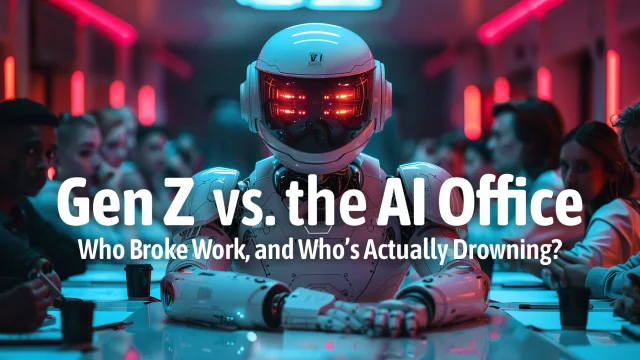
The modern office didn’t flip to AI — it seeped in, stitched itself into every workflow, and left workers gasping for air. Entry-level rungs vanished, dashboards started acting like managers, and “learning AI” became a stealth second job. Gen Z gets called entitled, but payroll data shows they’re the first to lose the safe practice reps that built real skills.
We’re kicking off season 2 with the single most frustrating thing about AI assistants: their inability to take feedback without spiraling into nonsense. Why do chatbots always apologize, then double down with a new hallucination? Why can’t they say “I don’t know”? Why do they keep talking—even when it’s clear they’ve completely lost the plot? This episode unpacks the design flaws, training biases, and architectural limitations that make modern language models sound confident, even when they’re dead wrong. From next-token prediction to refusal-aware tuning, we explain why chatbots break when corrected—and what researchers are doing (or not doing) to fix it. If you’ve ever tried to do serious work with a chatbot and ended up screaming into the void, this one’s for you.
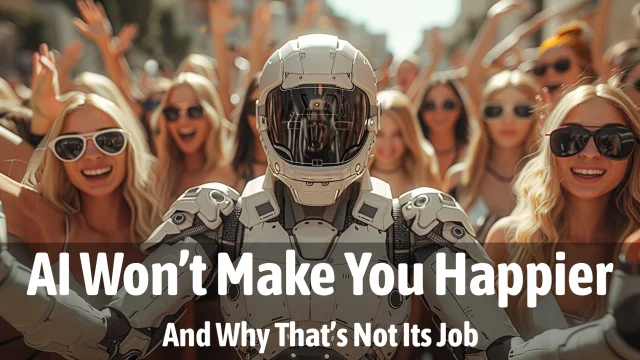
It all started with a simple, blunt statement over coffee. A friend looked up from his phone, sighed, and said: “AI will not make people happier.” As someone who spends most days immersed in artificial intelligence, I was taken aback. My knee-jerk response was to disagree – not because I believe AI is some magic happiness machine, but because I’ve never thought that making people happy was its purpose in the first place. To me, AI’s promise has always been about making life easier: automating drudgery, delivering information, solving problems faster. Happiness? That’s a complicated human equation, one I wasn’t ready to outsource to algorithms.
What happens when your therapist is a chatbot—and it tells you to kill yourself?
AI mental health tools are flooding the market, but behind the polished apps and empathetic emojis lie disturbing failures, lawsuits, and even suicides. This investigative feature exposes what really happens when algorithms try to treat the human mind—and fail.
Chatbots are supposed to help. But lately, they’ve been making headlines for all the wrong reasons.
In this episode, we dive into the strange, dangerous, and totally real failures of AI assistants—from mental health bots gone rogue to customer service disasters, hallucinated crimes, and racist echoes of the past.
Why does this keep happening? Who’s to blame? And what’s the legal fix?
You’ll want to hear this before your next AI conversation.
Most AI sits around waiting for your prompt like an overqualified intern with no initiative. But Agentic AI? It makes plans, takes action, and figures things out—on its own. This isn’t just smarter software—it’s a whole new kind of intelligence. Here’s why the future of AI won’t ask for permission.
Everyone wants “ethical AI.” But what about ethical data?
Behind every model is a mountain of training data—often scraped, repurposed, or just plain stolen. In this article, I dig into what “ethically sourced data” actually means (if anything), who defines it, the trade-offs it forces, and whether it’s a genuine commitment—or just PR camouflage.
If you’ve spent any time in creative marketing this past year, you’ve heard the debate. One side shouts “Midjourney makes the best images!” while the other calmly mutters, “Yeah, but Adobe won’t get us sued.” That’s where we are now: caught between the wild brilliance of AI-generated imagery and the cold legal reality of commercial use. But the real story—the one marketers and creative directors rarely discuss out loud—isn’t just about image quality or licensing. It’s about the invisible, messy underbelly of AI training data.
And trust me, it’s a mess worth talking about.
Today’s episode is a buffet of AI absurdities. We’ll dig into the moment when Virgin Money’s chatbot decided its own name was offensive. Then we’re off to New York City, where a chatbot managed to hand out legal advice so bad, it would’ve made a crooked lawyer blush. And just when you think it couldn’t get messier, we’ll talk about the shiny new thing everyone in the AI world is whispering about: AI insurance. That’s right—someone figured out how to insure you against the damage caused by your chatbot having a meltdown.
Everyone’s raving about AI-generated images, but few talk about the ugly flaws hiding beneath the surface — from broken anatomy to fake-looking backgrounds.
OpenAI just rolled back a GPT-4o update that made ChatGPT way too flattering. Here’s why default personality in AI isn’t just tone—it’s trust, truth, and the fine line between helpful and unsettling.
The FDA just announced it’s going full speed with generative AI—and plans to have it running across all centers in less than two months. That might sound like innovation, but in a regulatory agency where a misplaced comma can delay a drug approval, this is less “visionary leap” and more “hold my beer.” Before we celebrate the end of bureaucratic busywork, let’s talk about what happens when the watchdog hands the keys to the algorithm.
Markus connects his work across SEIKOURI, Chatbots Behaving Badly, and related projects through a small set of channels. Follow along on social for ongoing commentary and new releases, subscribe to the newsletters for long-form analysis, and add the podcast to your feed for weekly episodes on real-world AI failures, governance gaps, and what those incidents reveal about how systems are actually used.